


Everyone in the coffee shop line wore pink or red. Paper hearts clung to the windows. Someone had looped a pink-heart garland around the register. At the counter, a man balanced a bouquet under one arm, a heart-shaped box of chocolates in one hand, his other held out for some kind of swirled pink frappe covered in whipped cream and chocolate drizzle.
Overkill.
I stepped into the line and kept my hands in my pockets. I had nothing to buy for anyone. That suited me fine. I would take my plain coffee out into the cold and get on with my Saturday. February could keep this lousy day. I only hoped this Valentine-obsessed crowd didn’t slow me down.
I wasn’t optimistic.
As the line moved forward I glanced toward the tables on the other side of the rope.
They sat near the side window, where the gray light from the street spilled across their four-top. The younger woman cradled her cup with both hands. She’d pulled her auburn hair back, and a few strands had come loose near her ear. She wore a simple wool coat over a cream colored dress, nothing flashy, nothing heart-shaped or rosy-red.
She smiled at her companion, but it felt incomplete…wistful, somehow. When she reached across the table and rested her hand over her tablemate’s, something in the simple gesture caught me. I turned back to the counter and looked down at my shoes, blinking hard.
I’d almost forgotten that kind of touch.
I still had them in my peripheral vision. Her white-haired tablemate carried her elegance in the way she sat, perfectly upright. A heavy coat lay folded over the back of her chair, and a large leather satchel rested by her feet. She shifted against it, and the faint undertone of old tobacco rose and fell in the air.
The older woman reached down and pulled out a small lidded cardboard box. It looked old and well-loved. “I’m so glad you could meet me today, Camille. Are you sure I’m not keeping you from anything…or anyone?”
Camille. I turned the name over in my head. It matched the younger woman’s understatement.
Camille managed a smile, wide enough for a dimple to appear in one cheek. “No, Gram. I’d tell you.”
“I’m counting on it,” Gram said. “You know I hate missing the good gossip. And your mother–” She tsked and shook her head disapprovingly.
“--thinks gossiping is common,” Camille finished.
“Exactly. She never was much fun, even as a baby. Always so serious.” She lifted the lid and began laying items out in small piles, mostly black-and-white photos, but also envelopes with softened corners and handwriting that had been pressed into the paper long ago.
The line moved again. I stepped forward and told myself to mind my business.
My mother used to listen to strangers like this. In restaurants she would get that faraway look, like she had drifted off. But no, she was collecting some little scrap of human truth from the next table to carry home and share later.
She could turn anything into a history lesson. And just like that, I missed her.
Gram touched a flat manila envelope, and her hand trembled once. She pushed it aside.
“I finally went through the last boxes,” she said. “The ones I couldn’t bring myself to open after Mama died. I found some things. They’re….here, let me show you.”
Good lord. The woman at the table must be in her eighties. How old had Mama been?
My place in line came up, and the barista looked at me with a bright smile that had seen too many couples in the last hour.
“Happy Valentine’s Day. What can I get you?”
“Uh-huh. Coffee. Black.”
Her smile slipped. “Anything else?”
Everything inside the case had been decorated for today, too. Chocolate drizzle, pink icing, and little sugar hearts everywhere.
“A scone,” I said. “Plain. If you can find one.”
Her expression softened despite my tone. “I think we have a few in the back.”
I nodded and rocked on my heels while she filled the order.
The cup was hot against my palm. The scone was warm and smelled like butter, tempting me through the bag.
I turned toward the door. But before I could stop my feet, they pivoted, carrying me to an open table. It sat across and a little behind the two women.
Now I sat facing the older woman, close enough to see the tabletop and the photos spread between them. Camille was in profile, giving me the curve of her cheek, the shine of her hair.
Across the aisle, Gram sorted through photographs, touching only their edges. She moved the top ones aside, then slid a picture free and held it out across the table.
Camille looked down, a laugh slipping out of her before she could stop it. “Is that Great-Gran Ellen and Great-Grandpa Gordon?”
“It is.”
“They look like babies,” Camille said. She tipped the photo toward the light. “I mean, I know they weren’t, but still.” Her voice went soft. “Oh, I miss her!”
Gram’s mouth lifted at one corner. “ I do, too. Your mama adored her grandfather. Of course, he spoiled her to no end, maybe because she was his first grandbaby. I wish you could have met him. Daddy was a good man.” Gram took the photo back, placed it on the table, and reached into the box again. She pulled out a second picture and slid it forward.
“This one,” she said, “was taken in forty-two, before Mama met Daddy.”
Camille stared at it for a moment. When she spoke, it came out softer.
“She was so beautiful. How old is she here?”
Gram leaned in and looked at the photo without taking it back. “She would have been eighteen, maybe nineteen.” Her eyes lifted to her granddaughter’s face. “You look just like her.”
Camille glanced up, startled.
I shifted forward a little, careful about it, but Camille held the picture to her far side, and her body blocked all but the edge of the photo. I leaned back again, disappointed. The motion drew Gram’s eyes to me, sharp and curious. I dropped my eyes to my coffee.
“You do,” Gram insisted, a smile tugging at her mouth before she turned fully to Camille. “You have the same hair, same eyes, same build. Do you remember that dress you wore when you graduated from college? The blue one. You could have stepped right out of this picture.”
Camille’s mouth lifted. She looked down again, tracing the edge of the photograph with her thumb.
“You keep that.”
“Oh, I couldn’t!”
“You can, and you will.” Gram reached for the box again. She hesitated this time. Not long, but long enough for me to notice even with my gaze partially averted.
She pulled out another photo, big for that era. I guessed it must be a wedding portrait.
Gram held this one longer, her fingers working the bottom edge. Then she passed it over.
Camille’s eyes narrowed slightly, like she was trying to place something that didn’t fit with the other photos. She lifted it up higher to the light.
And suddenly, I had a clear view of the black and white photo.
Camille’s twin stood beside a tall, broad-shouldered man in a sharp wool coat with a single metal bar on the shoulder. I knew the insignia and uniform. Whoever he was, he was a second lieutenant in the Army Air Forces.
His smile came easy and unguarded as he looked down at the girl tucked against his side. She had her hand pressed to his chest near the side of his sharply pressed tie. She gazed up at him, bright-eyed, her smile for him only. She was wearing a pretty cotton print dress, maybe her best.
Two people in love. Even I could see it. Despite the print dress, I was still betting on wedding portrait.
“Who is that?” Camille asked. She flipped the picture over looking for a name. A sharp black pen had scrawled the date on the back: July 13, 1943.
Gram’s hands rested on the table now, empty. Her fingers had gone still.
“That,” she sighed, “is Jack Lawrence.”
Camille blinked. “Who is he?”
Gram’s voice came quieter now. “I think…I think he’s my real father, or, the man who fathered me. I suppose in all ways that count, Gordon will always be my real father.”
Camille’s hand dropped to the tabletop. “I don’t understand.” She looked at the picture still in her hand. “What? How?”
I heard it, and my hand went for my coffee before my mind caught up.
My wrist clipped the cup, and the coffee tipped before I could stop it, knocking the lid clean off. Hot liquid spilled across the table in a dark rush, running straight toward my scone.
“Oh, dammit,” I said, too loud.
I stood up fast enough to knock my chair back an inch. The scrape yelped across the bakery’s tile floor. A few heads turned, including Camille’s and her grandmother’s. I yanked napkins free from the dispenser and slapped them down, plugging the spill like a boat leak. Coffee soaked through the first handful immediately.
“Come on,” I muttered, grabbing more.
Nearby, a chair scraped.
Stupid stupid stupid, my mind chimed in semi-panic.
Then a voice said, close and careful, “Hey. It’s okay.”
Enjoying this Valentine’s story? Share it with friends!
I looked over into gorgeous brown eyes.
She smiled, taking more napkins from my dispenser and getting to work. She didn’t even hesitate.
“Looks like your scone is still okay.” She moved it away from the spreading mess and started mopping the far side of the table.
“I’m so sorry,” I said, as if my clumsiness was a moral failing.
“It’s only coffee,” she replied, pressing napkins against the edge of the puddle, quick and efficient.
I grabbed more and felt heat crawling up my neck.
“I swear I’m not—” I started, then stopped, because I didn’t know how to finish.
Not careless? Not flustered? Not eavesdropping on a stranger’s family history like a radio drama?
Zero for three, buddy.
I pointed at the mess like it explained everything. “I’m just… clumsy.”
She looked at me, and her eyes held mine a second longer than necessary.
“Clumsy,” she repeated.
I felt a grin tug at my mouth. “That’s me,” I said. “Natural talent.”
Her mouth twitched. It was almost a smile, and it made my stomach tighten in a not unpleasant way.
“Well,” she said, glancing at the table, “you have it under control now.”
“Yes.” I said, then added a beat too late, “Thanks.”
Her smile widened. ”At least you didn’t lose the important thing,” pointing at my half-finished scone.
“Give it time,” I blurted, then took a half step back. Think first, talk second, genius.
“Oookay,” she half-laughed.
I made a useless waving gesture, as if I were dismissing her and not my own embarrassment.
Way to make a spectacle of yourself, man. But without my coffee, what reason did I have to stay?
Then I heard footsteps behind me, light and quick.
The barista appeared at my elbow with another cup of black coffee in her hand.
“Here,” she said, holding it out to me. “On the house.”
I blinked. “That’s not necessary.”
“Happy to.” She gave me a small, knowing smile. “Here, let me clean this up.”
She glanced past me as she swept the tiny mountain of ruined napkins into the bag she’d brought with her, her eyes flicking toward the table by the window and quickly back to me. “It’s one of those days. We’ve seen worse.”
I looked at her, slow to understand what was going on. Then I pivoted toward the counter. The girls behind it, who must have been watching me watch the next table, suddenly found urgent work. One grabbed a rag that didn’t need using. Another started rearranging lids like they hadn’t been stacked perfectly five seconds ago.
Right. Lesson learned.
I cleared my throat and lifted my new cup of coffee a fraction, as if to make a toast to my own stupidity. “I should probably get on.”
The barista glanced toward the front windows. “You sure? It’s pouring out there,” she said, matter-of-fact. “Supposed to snow soon, but right now it’s ugly.” She headed back to the counter.
The rain came down hard enough to put the street underwater. The cars moved slowly, their tires hissing over slick pavement.
I had a great umbrella. Too bad it was eight blocks away leaning behind my front door where I’d left it when I walked to the coffee shop.
That’s what I got for believing the weatherman’s “little chance of rain.”
Across the aisle Camille and her grandmother went back to their conversation as if I wasn’t there. Small blessings.
I sat back down. Enough. Act normal. Sit here, eat your scone, and scroll your phone like everyone else.
Out of the corner of my eye I saw Camille pick up the last photo and turn it over. “But Gram,” she insisted, “It’s just a picture. Maybe this Jack was some random guy your mother knew before she met Great-Grandpa.”
I kept my head down and tried to focus on the journal article on my phone.
Gram reached back into the box and pulled out a small black notebook with a pebbled leather cover, its corners rounded and scuffed from use, small enough to fit into a dress pocket. A simple set of metal rings held the narrow-ruled pages inside. She placed it near the table’s center.
“What’s that?”
“Mama’s diary from 1942 and 1943.” Gram began flipping through the pages. “Most entries are short, but she writes several times each week. The weather. What’s happening on the farm. See? ‘June 29, 1943: Hot today. No rain. Cut beans. Daddy went to town for supplies’. Sometimes longer entries.”
Camille turned so she could better see the book her grandmother pressed open on the table. I propped my head in my hand, flipped to the NYTimes app, and made a show of scrolling the headlines. My gaze fixed on the screen even as their tabletop stayed in the corner of my vision.
“I didn’t know Great-Gran Ellen kept a journal.”
“Neither did I until recently,” Gram said. “But then, this was in her most private things.”
She sat back. “Do you think it’s wrong of me to share this with you? She kept this hidden for decades. My entire life, really, and I’ll be 82 in a few weeks.” She clicked her tongue once. “Goodness, when did I get so old?”
Camille didn’t answer right away. When she did, her voice was so quiet I had to strain to hear. “I think we’re all entitled to privacy, Gram, but it seems to me you’re talking about events that involve you, too. And Mama, and me. Everyone has a right to know who their family is.”
Across the aisle, I looked down at my phone and pretended I was scrolling. But my screen had gone dark minutes ago.
“I’m so glad to hear you say it,” Gram said.
Camille flipped forward through the journal. Then she flipped back. “Gram, do you know what this is?”
Gram leaned forward again. “The stars?” She smiled. “Tell me what you notice.”
Camille flipped through a few pages. “Here are five together.” More pages. “Five more a few weeks later.” Another flip. “And six…” She looked up. “Oh.”
“You have tracking apps on your phone. They kept track by hand. Now, since you noticed, go to June of ‘43.”
I had no idea what they were talking about.
Camille flipped forward several pages. “Here. The day her daddy went to town for supplies. I didn’t notice the star before.” She looked up at her grandmother, who nodded.
She flipped forward again, slower now, her thumb easing the pages apart with care. Page after page turned. Her forehead creased.
“They stop.” Camille stared at the empty margins. Then her eyes drifted to the photo still sitting on the table, of Ellen and the stranger. She picked it up and flipped it over.
“And the picture with Jack was taken on July 13th.”
“Yes.”
Camille tilted her head and swallowed. “So…she would have known.”
“She would have suspected,” Gram corrected gently. “Long before she would have shown. Even so, it probably took her a month or two to realize.”
Oh. Ohhhh. The slow guy is caught up again.
Camille flipped the picture back over so the couple faced up. “But I can’t picture Great-Gran sleeping with someone outside of marriage. She always seemed so… proper.”
Gram reached across the table, took the little black diary back from Camille, and tapped it gently against the edge of the table. “Honey, wartime makes fools of the careful.” She paused. “But my mama didn’t do anything halfway, either, so you’re right to think that.” She put the diary to the side. “We’ll come back to this.”
Gram reached for the manila envelope she’d set aside earlier and drew out a single sheet of backing paper with three clippings mounted to it, two on one side and a larger one on the other, along with a faded envelope worn thin from years of handling.
“Here,” Gram said. “Read the clippings first.”
Camille traced a finger down the page as she read the clippings, one by one. “‘August 20, 1943. American heavy bombers struck deep into Germany Tuesday in one of the war’s longest daylight raids, hitting aircraft and industrial targets. Returning crews reported heavy fighter opposition. Army spokesmen said details were limited, but indicated damage was inflicted on important war plants.’”
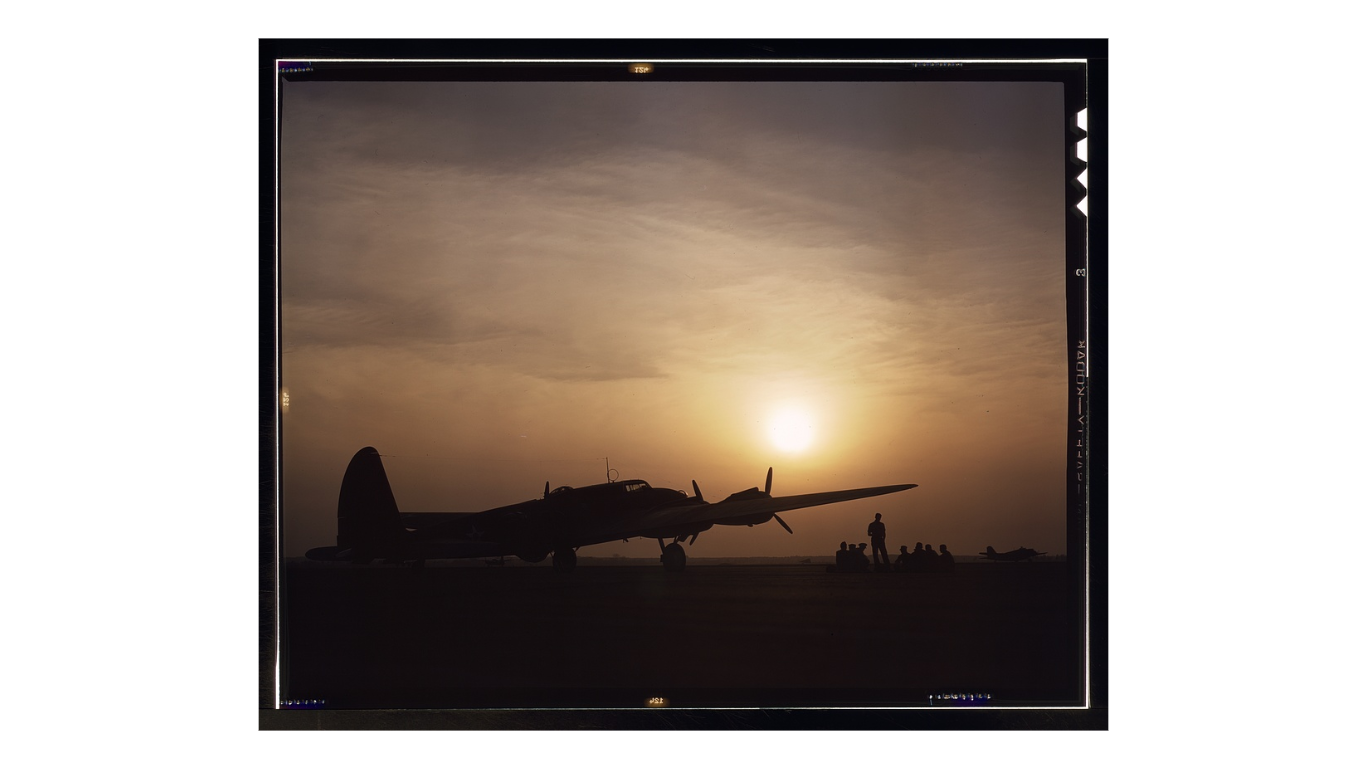
My stomach dropped, because I knew that Tuesday. The Schweinfurt–Regensburg mission was one of the first major U.S. daylight bombing raids deep into Nazi Germany. Fortresses went in deep to hit ball bearings and aircraft works, and the fighter cover could only stay with them so far. After that, it was hours of flak and German fighters carving up the formations. Men died in the air. Men went down behind enemy lines. Hundreds were killed or captured.
If Jack had been caught in that, God help him.
I could see Camille’s fingers worrying the edge of the paper as her eyes moved line to line, rereading the clipping. Her eyes flicked up to her grandmother.
“Jack was a pilot?”
Her grandmother nodded. “But families were never told where they were stationed. Mama wouldn’t have known where he was flying or if he was involved in this particular mission. She clipped this out anyway.”
Camille went back to the top of the page and read the entry a third time. Then the headline. Then the date.
Her eyes moved to the bottom entry. “The other one is from two weeks later.” She looked at her grandmother like she was waiting for her to correct it. “Two weeks?”
“Communication was slower then.”
“That’s glacial.” Camille shook her head. “ ‘Sept. 1 1943. Dr. and Mrs. Benjamin Lawrence received a War Department telegram this week stating that their son, Second Lt. John “Jack” Lawrence, Army Air Forces, has been reported missing in action over Germany since Aug. 17. Lt. Lawrence entered the service shortly after Pearl Harbor and went overseas earlier this summer.’”
Camille dropped the paper on the table. “Missing in action?” she said. “Oh, poor Great-Gran. That waiting….no.”
“They would have known not to hope. But I think Mama knew the moment he died. When the missing in action notice came, it must have felt like validation.”
“But…how could she possibly know?”
Gram shook her head. “A question for her, and one we’ll have to live without. But, here,” Gram pushed the diary back to her, “look at her entry on August 17th.”
Camille pulled the book closer. She held it shut for a beat, thumb on the cover. Then she opened it and read.
“Woke before daylight in a fright. Dreamed the sky was burning. Felt sick all day. Oh, Gram.”
I quietly flipped my phone case closed. The hell with it.
Across the aisle, Camille was still processing. “He joined up after Pearl Harbor but didn’t go overseas until 1943? I didn’t realize the timeline was that stretched.”
“He was a pilot. Flight school took longer. Then he had to learn his aircraft and crew.”
Right. And then all he had to do was survive twenty-five missions and he could come home, sometime as quickly as three months.
Except in ’43, most airmen died before making that number.
Camille folded in on herself, shoulders rounding, one hand pressed flat to her stomach. All that careful posture she’d been holding, so much like her grandmother’s, slipped away at once. Her gaze jumped from the photo of Jack and Ellen to the paper trembling in her fingers, then to the open diary, as if she could force the dates to change.
“She and Jack were together on July 13th, and he was gone forever five weeks later? That’s so wrong.” Her voice broke on the last word.
Gram reached across toward her granddaughter. “We don’t always get the time we want with the people we love. That’s not fair.” She rested her hand over Camille’s wrist, steadying it. “But that’s why we can’t ever waste the time we’re given.”
My eyes lifted to them before I could stop myself. I glanced at Camille.
She faltered, breath caught, then turned toward the window. Her reflection hovered in the glass, pale and sharp against the gray street outside. Pain pulled tight around her mouth, tension gathering the corners of her lips. Her shoulders shuddered once, and then she straightened up.
“Gram,” she said, voice rough but steady, “you picked a heck of a day for this.”
Gram’s mouth curved, and her hand stayed on Camille’s wrist a moment longer. “Using the time I’ve been given, my dear. But if it’s too much, say so. We can put the rest away and come back to it another day.”
I kept my mouth shut, but inside I was begging them not to stop. I didn’t realize I was holding my breath until Camille said, “No. We’ve come this far.”
I sucked in air so hard it made an actual sound. Loud enough that both women glanced over.
I panicked and turned it into a cough, quick and fake at first, then real when my throat decided to play along. I lifted my scone like it was evidence.
“Sorry,” I managed. “Went down the wrong way.”
Gram gave me a brief, assessing look. Camille looked relieved, like she’d take any excuse to laugh but had swallowed it down out of manners. Her eyes met mine for half a second, soft and amused. They both turned back to their table.
Jesus. You idiot.
And the worst part was, I still wasn’t leaving.
“All right then, dear. Before you read the last clipping, here, in Mama’s diary, the entry on September 26th explains it.”
Camille followed her finger. “Mrs. Lawrence copied the captain’s letter for me. Gave it to me at church today. Mama didn’t speak the whole drive home.”
She held her grandmother’s gaze for a long moment, then turned the backing paper over in her hands. She read the letter once. Then again, slower, as if a second reading might change it.
When she spoke, her voice was even rougher than before. She didn’t waste time with the polite beginning but dropped into the meat of it; I recognized the phrasing from primary source documents I’d read before.
I’d never thought about what they did to the people holding such letters. Not until now.
“‘Since the mission of August 17, I have spoken with members of other crews who were flying in the same formation and in nearby positions. Though no one man saw every moment clearly, there is enough agreement among their reports to establish that Lt. Lawrence’s aircraft was struck in the air and exploded. It went down immediately, and no parachutes were observed. From these reports, it is my belief there could have been no survivors.’”
Camille sat still for a long time. Gram sat without speaking, giving her the time she needed to digest.
Finally, she lifted her eyes to her grandmother’s. Her voice sounded stilted, even to me. “This still doesn’t prove anything. Maybe he was…a mistake she moved on from quickly. Maybe she met your father and that was that.”
Gram leaned forward. Her voice didn’t rise, but something in it sharpened. “Honey, you don’t keep clippings for a mistake. And you don’t have a full-term baby in April unless something happens in July.” She gave Camille a look over the top of her glasses. “You organized that big get-together for my 80th. Don’t tell me you’ve forgotten when my birthday falls.”
Camille didn’t answer. She looked over at the picture of Ellen and Jack again, and shook her head.
“One more thing,” Gram added. Her hand went back to the manila envelope and picked up the APO-marked letter sitting on top of it. She unfolded it and held it close to her chest for a beat.
“This is from Jack. I’ve read it,” she said, “more times than I should admit. So you just listen this time.”
She lowered her gaze to the page.
“August fourteenth, nineteen forty-three,” she said softly. “My El…”
14th Aug 1943
My El,
I don’t have much time, and I’m tired clear down to the bone, but I couldn’t sleep until I wrote you. I’m still safe. Still in the air. Can’t tell you much more or they’ll put all kinds of holes in this before it reaches you.
Most days I’m so busy I don’t think at all. I do what I’m told, go where I’m sent, keep moving.
But tonight I stepped out of my tent and looked up, and the full moon shocked me out of my stupor. Big and bright as hell, lighting everything up like a lamp.
Just like that I was back to that last night in your parents’ back field. I could almost feel you, like if I turned quick enough you’d be right there beside me.
I’m sorry it went the way it did. If I could’ve stayed one more day, we’d be hitched. But when the orders changed there wasn’t a damn thing I could do.
You know I’m no good with fancy words. But I need you to know I haven’t stopped thinking about you. Not once. I don’t believe a person can love someone the way I love you and not carry them around inside. We’ve got a part of each other now, no matter what.
Even being this far away, we can still share that moon. I know it doesn’t sound like much, but it feels like everything right now. Like you and I are together again the way we were that night.
So when the next full moon comes, I want you to think of me over here missing you like hell and waiting for the day I’m home.
Don’t let your mama work you too hard while I’m gone. Get some sleep. And if something makes you smile, let it.
Jack
When she finished, Gram didn’t look up right away. She kept the paper in her hands for a moment, rereading the words. Then she set it on the table between the photograph and the diary.
“When did she receive the letter?” Camille asked, her voice low, like she almost didn’t want the answer.
“Weeks after they knew he was gone. APO mail had to go through censors first.”
Camille let out a ragged sigh. She stared at the letter, and her throat bobbed.
“Now look here, baby-girl.” Gram reached across the table and took both of Camille’s hands, folding them into her own like she could hold her steady by force. “I love you more than just about anyone in this universe. But I want you to hear Jack’s last words to your great-grandmother again: if something makes you smile, let it.”
Yeah. Definitely about Camille.
I’d spent my whole career turning grief into something I could study so it couldn’t touch me. But sitting there with my coffee and my stupid scone, I realized I had been feeding off them all morning like an emotional leech.
Still, I felt stuck. I couldn’t get up without punching a hole in whatever Gram was trying to give Camille. This was my punishment: now I had to stay when I wanted to leave.
“Gram, you know it’s not that easy. I don’t know if I’m ready.” Camille said at the other table. “Besides, who would date a 29-year-old-widow?”
I turned away from them, my throat tight. Oh, Camille. I’m sorry.
“It’s as easy and as hard as choosing to live again, my dear. And mark my words: it’s a choice.”
Camille choked out something that could have been a laugh or a sob. “You sound like the grief counselor.”
“Oh, never anything so modern as that.” I could hear the smile in Gram’s voice. “But let me say this before we put all this aside and get on with our day. I think you’ll agree with me now that Jack is my biological father. Yes?”
Camille answered, “Yes.”
“Yes. And from all this, Mama and Jack seemed to love each other in the same way you and Josh did before he died. All in.”
Camille gave a small, broken half-laugh, and I heard her sniffle, quick and sharp. “Yeah.”
“Even so,” Gram went on, “when Mama met Gordon a few weeks later, they married. And they were together, happily, for decades. When Daddy died, Mama never stopped telling stories about the good years with him. You’ve heard some of them.”
“She did love talking about him,” Camille said.
“I want you to understand you can have both,” Gram said. “You can miss Josh every day and still let someone love you again. It’s not a betrayal.” She paused. “And I guarantee you, it’s what he’d want for you, especially after so much time.”
“Oh, Gram. You do know how to make a day memorable, don’t you?”
Gram answered, but I missed the words under the scrape of Camille’s chair and the quiet hush of fabric. I glanced over in time to catch Camille leaning down, Gram’s hand braced at her back.
“I’m going to freshen up,” Camille said. “Be right back.” Her boots crossed the tile, quick and light, disappearing into the back.
Gram watched her go.
This was my chance for a no-drama exit.
I slid the rest of my scone into the bag, folding the top down like I was packing away contraband. My phone went into my canvas duffle, full of papers I needed to grade and a book from the campus library I hadn’t finished.
I got the strap over my shoulder and shifted my chair back.
“Young man.”
I stopped.
Gram’s eyes were on me. Once again I was struck by her simple elegance.
“Ma’am?” I said.
“How’s your day going?” she asked. She said it easy, like she was being polite. But she wasn’t asking to be polite. I didn’t catch that until I answered.
“It was going okay,” I said, “until I dumped coffee all over myself.”
Her mouth lifted slightly. “Mm. I saw that. Do you live near here?”
“Over by the university,” I said.
“And you walked in this weather?”
I glanced toward the front window. The rain was starting to spit snow, still more slush than anything.
“It wasn’t bad this morning,” I said. “Just cold.”
I hesitated. Then, because my mouth never knew when to quit, I added, “I forgot my umbrella.”
Gram clicked her tongue, amused. “That was clumsy of you. Is this a regular pattern?”
I let out a small laugh before I could stop myself. “No, ma’am. Just today, it seems.”
She waited again. Then she asked, “What do you do?”
“I’m a professor,” I said.
“Oh?” Her eyebrows lifted. “At Whitlock?”
I nodded.
“My husband taught law there for forty years. And ethics. What do you teach?”
Of course he did. Great. Bet she was his best student. “History.”
Her eyes sharpened, and the room seemed to narrow around me.
“That explains the look you got when Camille read the first clipping out,” Gram said, calm as ever. “You knew what it meant.”
Heat crawled up my neck. I didn’t have a good excuse for my behavior. So I went with the truth. “I’m sorry. I shouldn’t have listened,” I said. “I know that.”
“Mmhmm,” she said, giving me rope.
You owe her more, you jerk. Keep going.
“I should’ve left when I spilled my coffee,” I said. “I meant to. But first the story caught me.” I nodded toward the letter and the clippings. “And then,” I said, “I didn’t know how to leave without interrupting and making things worse.”
That got a flicker out of her. Not a smile, but a small shift in her chair that I read as approval, maybe. “Is that all?” she asked.
“No,” I said. I put my duffle on the floor in front of me, like admitting defeat. “You two are lovely together.”
The words felt too personal the second they were out, but I kept going anyway. “And I think I wanted to be near that for a minute.”
Now Gram looked interested. “Why?” she asked, her head tipping a fraction as she took me in.
Something about her opened a door I usually kept slammed closed. I surprised myself by saying “I don’t have much family left.”
I adjusted the strap on my duffle, avoiding her gaze. “Any, really. And it was nice to see the closeness between the two of you.” Now I caught her eyes again. “It’s easy to see that you care.”
Gram nodded. “I do. But, your parents?”
“My mother died when I was nineteen.” I looked toward the exit, like maybe it was time to go. But I stayed in the chair and shrugged uncomfortably, adding, “I’ve been on my own since.”
“That’s hard,” she said.
I squirmed in my chair. I didn’t like having my personal history exposed like this.
Bet they didn’t either, jerko. Stay where you are.
“I’m truly sorry about eavesdropping on you and your granddaughter. And embarrassed.”
Gram’s mouth lifted at one corner. “Good. You should be.” Then her expression softened. “But it sounds like you needed that reminder about using the time you’ve got, same as my granddaughter.”
Her words made me sit back in my chair like I’d been hit.
Ouch. And yes, maybe.
Just then Camille came back from the bathroom. Her face was put together again, and the loose strands near her ear had been smoothed into place. She slowed at the table, her eyes moving between Gram and me, curious.
“Hello,” she said.
“Hello, my dear,” Gram answered. “This is–” she looked over at me and paused, waiting.
I jumped up and smiled at Camille. “Dr. Garrett Caldwell. Nice to meet you.”
“He teaches history at Whitlock.”
“Oh?” Camille said, her head turning toward me with interest. “My grandfather taught at Whitlock.”
“I was just telling him about that,” Gram said. “Dr. Caldwell has graciously offered to carry this heavy bag back to the car, since the weather has turned.”
“I did?” I said, ever the slow one. “Oh, yes. I did!”
Camille’s smile tugged at one corner. “That’s kind of you.”
Gram began packing everything away with quick, practiced hands. Camille helped, quieter now, passing things back without looking at them too long.
I waited with the satchel strap looped over my shoulder like an obedient pack mule.
As Gram snapped the box shut, Camille glanced at her. “So how did Ellen meet Gordon?”
Gram didn’t even blink. “That’s a story for a different day, baby-girl.”
Camille made a face. “You’ve never told me.”
“I know,” Gram said. She stood, handing me her coat. I helped her into it, managing to look more competent than I felt.
The women headed for the door. I followed a step behind carrying my duffle over one shoulder and Gram’s leather bag over the other.
Between the table and the register, my brain wandered off again, stuck on the story I wouldn’t get to hear. I wondered how Gordon and Ellen had married so soon after Jack. Did Gordon know? How much had Ellen shared?
“Dr. Caldwell?” Camille said, with a small upward tilt.
I blinked hard and glanced her way. “Sorry. Yes?”
She studied me like deciding whether I was hopelessly flighty or just perpetually distracted. “I was asking if next Saturday works for you.”
“For?” I heard myself say.
“To hear how Ellen and Gordon met,” she said, like it was obvious. “Gram said it might take a while, but I thought you’d be interested. If not…” her voice trailed off.
“Oh, no. I mean yes, yes!” I stopped, adjusting the bags on my shoulders and forcing my voice into a calmer tone. “Yes. Saturday’s great. And,” I added, before I could overthink it, “please call me Garrett.”
Camille’s smile reached her eyes this time. “Okay. Garrett.”
We reached the door. Gram stepped out first, Camille right behind her.
“Mind your umbrella, Camille. Mr. Caldwell left his at home.” Gram’s voice was dry, but there was laughter tucked underneath. I didn’t mind.
I glanced back once and caught the barista watching us from behind the counter.
I smiled at her, helpless.
She smiled back, like she’d seen worse.
Read more stories and nonfiction from M.D. Kenney. Visit any of the links below!
Dive into my ongoing paranormal romantic mystery, Garden of Little Peace, here:
Coming soon on Stories from a Dead Bookstore: a year-long series discussing all the ins and outs of opening a bookshop.

Want a little non-fiction? Read my long-form content about all the things that interest me (books, history, society, family) on The Everything Drawer. Start with my most popular article, about how time edits our cultural reading list, or my long form article about how America set on the 40-hour work week.

Some of the shortest 6,400 words I've ever read. I was fully immersed in the scene, and in El's diary, for that matter. What a story. And what a beginning for a beautiful life together for Garrett and Camille.
Oh my. Good heavens, you made me tear up. Beautifully done!